A cake, a tart or a dessert in a jar is a product the customer wants to see before ordering. That is why a good patisserie website starts with photos and a simple cart, not with long descriptions. For the patisserie Rynkowa Bistro in Łabiszyn we prepared an online shop on WordPress and WooCommerce: rynkowa.salabankietowa-ewa.pl. In this case study we show how we organised the offer, ordering and payments on a local patisserie’s website.
In short: an online shop for a patisserie in Łabiszyn
- Client: Rynkowa Bistro, confectionery, Łabiszyn (Kuyavian-Pomeranian Voivodeship)
- Industry: confectionery, retail sale of pastries and cakes
- Scope: graphic design, WordPress theme, a WooCommerce shop with categories and products, online payments, About us, contact, sales terms, cookies and an accessibility panel
- Technologies: WordPress, WooCommerce, Przelewy24, Blocs, cookie and accessibility plugins
- Website: rynkowa.salabankietowa-ewa.pl
The challenge: a patisserie shop alongside a banquet hall website
Rynkowa operates in the same town as Sala Bankietowa “Ewa”, and the company details on both websites point to a common seller. The two brands, however, have different goals. The banquet hall sells through conversation, while the patisserie wants to take orders for specific products, without lengthy questions about details.
The brief gave us four needs:
- a clear offer in a few categories: cakes, tarts and desserts in jars,
- online ordering with understandable information about quantity, packaging and availability,
- online payment and terms that comply with the rules of distance selling,
- a look consistent with the other website in the family of brands, but with a distinctly patisserie character.
That is why we did not build another business card website. It is a full-fledged shop, not a “twin” of the hall’s website with a calendar of dates: the customer does not book a date here, but places an order for products.
How we worked on the project
We began by establishing what is sold and how: what the categories are, what needs options (for example packaging) and what needs a conversation. Then we designed the shop layout around product photos and a burgundy colour scheme, consistent with the identity of Sala Ewa. We implemented the theme, configured WooCommerce and payments, and finally went through the entire process as a customer would: arriving, choosing a category, adding a product, the cart and contact.
The solution: a simple shop where the photo does the work
The menu is short: Home, Confectionery, About us, Account, Cart, New and a highlighted contact button. The visitor immediately sees where to look for the offer and where the cart is.
Categories instead of a long list
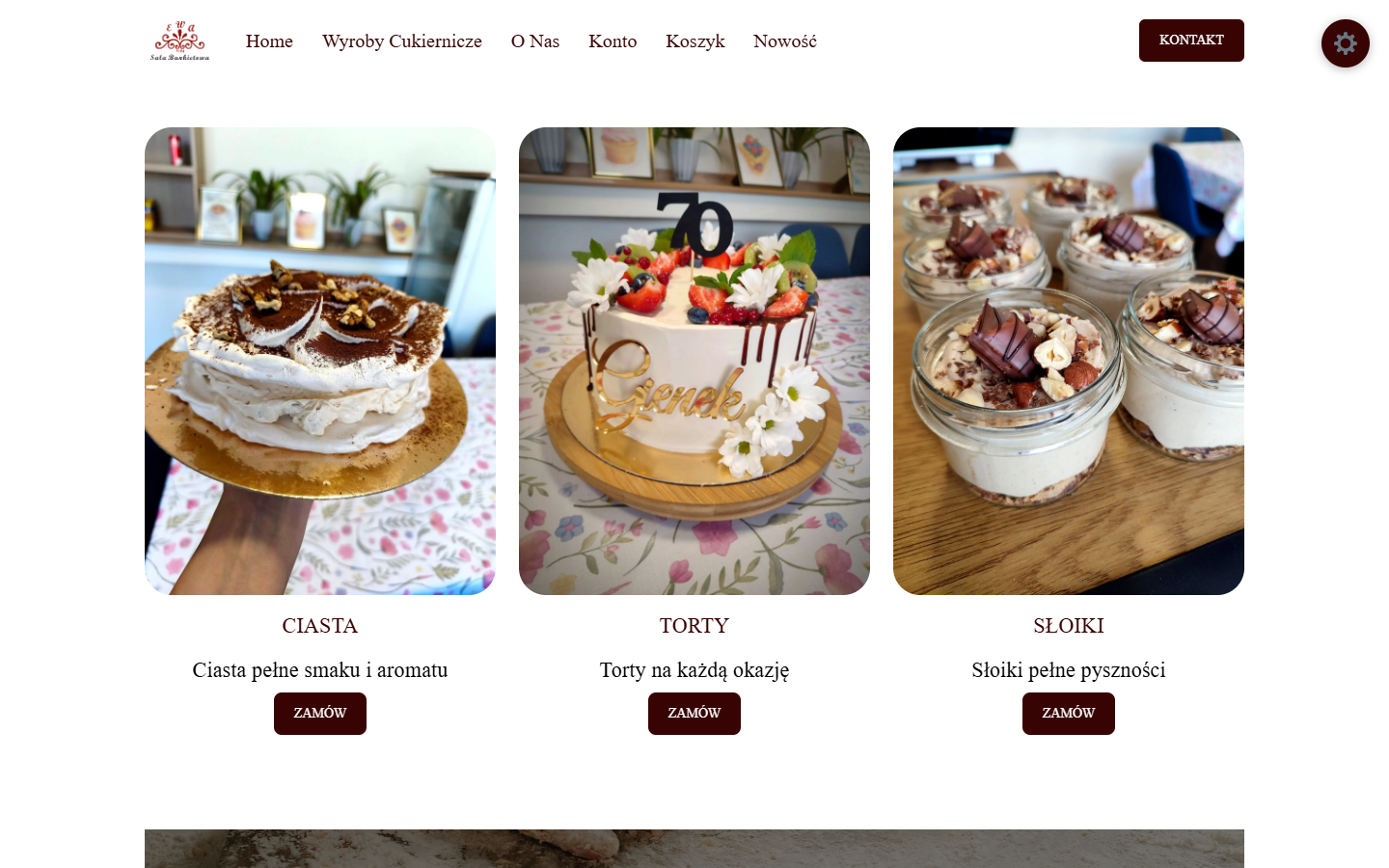
The offer is divided into three categories: Cakes, Tarts and Jars. Each has a large photo, a short description and an “Order” button. According to the shop’s data, at the time of verification the offer included 18 products, among them several desserts in jars, cakes and personalised tarts. That is few enough for the offer to be clear, and enough for the shop to make sense. Each category leads to a product list, and the breadcrumb trail on a product page lets you go back a step without using the browser’s back button.
Product page with options and availability information
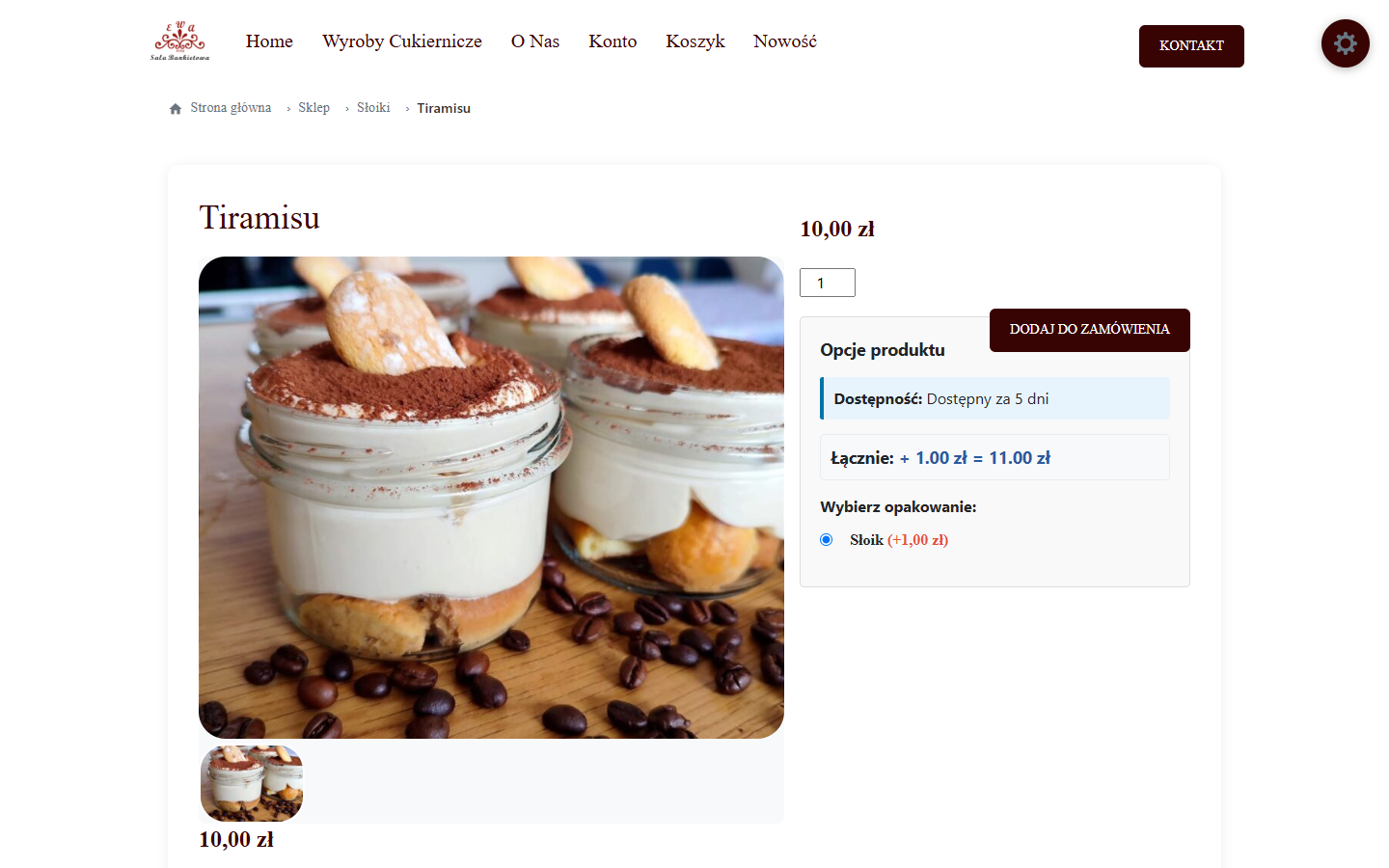
On a product page the visitor sees a photo, the price, a quantity field and an “Add to order” button. For some desserts in jars there is also a product options section, for example a choice of packaging with a surcharge and an automatically recalculated total, as well as availability information. This way the customer knows what they are choosing before they go to the cart. We used WooCommerce extensions for this, without writing a whole system from scratch.
Cart, account and payments
The order process is based on the standard WooCommerce cart, checkout and customer account. The Przelewy24 plugin runs in the shop, and the sales terms describe the forms of payment: online transfer and, where available, payment by card or cash on collection. The customer can collect the order in person or, if the patisserie offers it, use delivery. We state nothing here beyond what is in the terms.
About us and the patisserie’s story
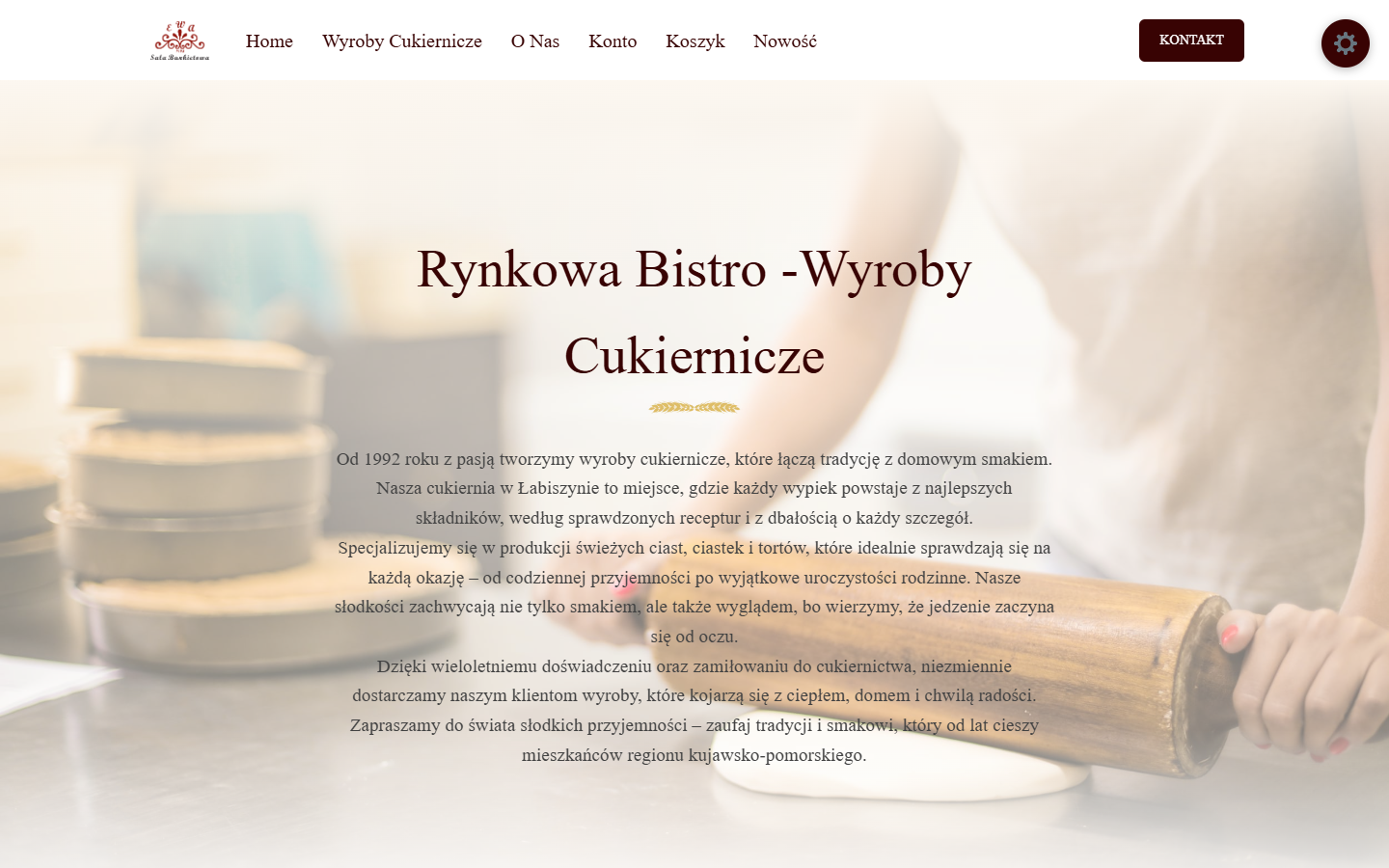
The About us page says that, according to the client, the patisserie has been operating since 1992 and specialises in cakes, pastries and tarts made to proven recipes. The text is short and warm, and a photo of the confectioner at work builds an impression of craftsmanship. This matters in an industry where the customer is buying, above all, trust in the hands that bake.
Contact and form
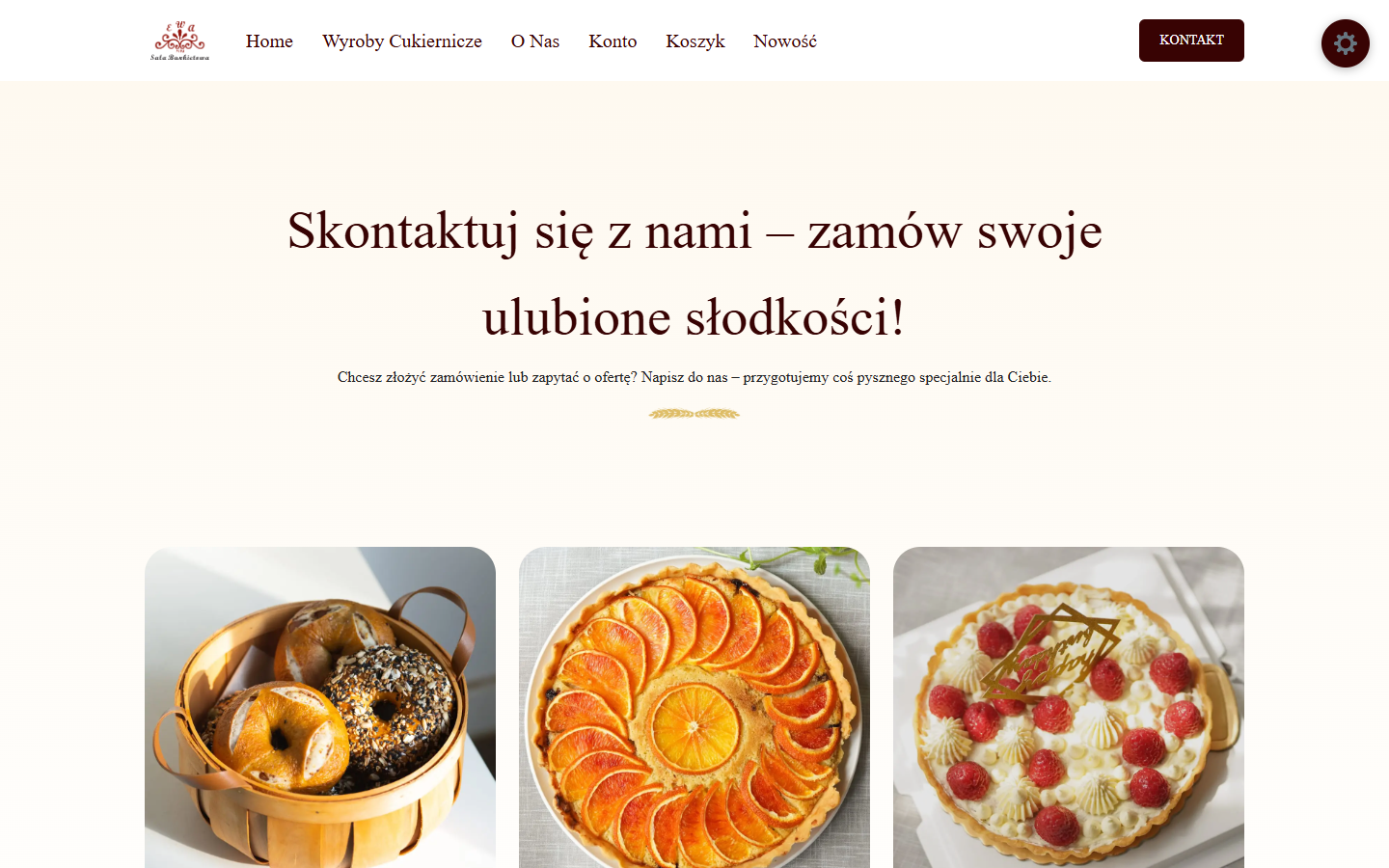
The contact page contains a phone number, the patisserie’s address, company details and a form: full name, phone, subject, email and message. The prompt above the form says plainly that you can place an order or ask about the offer. It is a place for customers who want to order a cake for a specific occasion or discuss special requests.
Why a separate shop and not orders by phone and social media
Orders taken through messages and by phone have one drawback: each one has to be copied out, confirmed and clarified. When a patisserie has a dozen or so regular products, most questions repeat: how much it costs, how it is packed and when it can be collected. A shop answers these in advance. The customer sees prices in zloty, chooses the quantity and options, and the patisserie receives the order in an organised form.
At the same time, the shop is not meant to replace conversation where it is needed. Cakes for special occasions, decoration requests or unusual ingredients require contact, which is why the contact button is highlighted in the header of every page, and the home page also has an invitation to order sweets for a family gathering or a company party.
Seller, terms and legal information
An online shop has obligations that an ordinary business card site does not. That is why the footer has links to the sales terms, the privacy policy and the “Returns and complaints” page, and the company details with the tax ID (NIP) are visible on the contact page. The terms describe the rules for placing orders, forms of payment, collection and delivery. Their content comes from the client, and we made sure they are easy to find.
SEO, GDPR and accessibility
The shop has separate category and product pages, as well as terms and a privacy policy, which is the basis for a website that takes orders. Product and category names are descriptive, so a search engine can associate them with queries about cakes and desserts in the Łabiszyn area. We do not promise specific positions in results.
- Cookies: a banner with the options “Reject”, “Settings” and “Accept” and separate categories: necessary, analytics and marketing, with links to the privacy and cookie policies.
- Terms and returns: pages with the sales terms, the privacy policy and “Returns and complaints” in the footer.
- Accessibility: a WCAG panel with font size adjustment, a simple font, contrast, highlighted keyboard focus, disabling animations and underlined links.
Technologies
The shop runs on WordPress and WooCommerce, with a theme prepared by us and layouts in the Blocs tool. Online payments are handled by the Przelewy24 plugin, and additional product options, such as packaging, by WooCommerce extensions. The cookie and accessibility panel are our plugins, shared by both websites in the family. The website is a separate installation, not part of the same site as the banquet hall: it has its own theme, products and shop settings. This way changes in one service, for example a shop update, do not affect the operation of the other.
The result
The patisserie has a channel that takes orders for specific products without lengthy conversations, while not losing contact with the customer who wants to agree the details. We do not publish the number of orders or revenue because we do not have such data. The qualitative effect is an organised offer, a clear purchase path and an identity consistent with the family’s other brand. Information about the company’s history and recipes comes from the client and is described as such. The shop can be developed step by step: adding new products and categories, changing seasonal photos or launching further forms of delivery when the patisserie is ready. The owner does not need a developer for this, because the offer is managed from the WordPress panel.
Who this solution is for
A shop in this style works well for local patisseries, bakeries, caterers and small food workshops that have a dozen to several dozen products and want to take orders online. If the offer rests entirely on individual quotes, an enquiry form will be better. With a larger range or sales with regular delivery, however, it is worth planning additional features, such as choosing a collection date or recurring orders. These are extensions we add only when they really fit the way the company works. See also our services.
We describe the family’s other brand, the wedding and event hall, in a separate case study. The difference is clear: there, the gallery and conversation are key; here, the cart and the order.
An online patisserie shop from Łabiszyn: local sales online
Rynkowa Bistro operates in Łabiszyn in the Kuyavian-Pomeranian Voivodeship, not in Bydgoszcz. As an agency from Bydgoszcz we also work with companies from the region, and this project shows that a local patisserie does not need a huge platform: a dozen or so products in three categories, photos, packaging options and online payment are enough. Descriptive names of categories and products help a search engine associate the shop with queries about cakes and desserts in the area, although we do not promise positions. On top of that come the information that every shop requires: sales terms, a privacy policy and return rules in the footer.
It is worth remembering the principle from this project: the shop takes over repeat orders, and conversation stays where the customer wants to agree a cake for a specific occasion. You will find practical tips on configuring a shop in the article on developing WooCommerce shops, and on building visibility in the region in the text on local SEO.
Compare this shop with the sister website of the Ewa banquet hall, where sales happen through conversation. Looking for a shop for your own workshop? See our services or book a conversation.
FAQ
Does a patisserie have to have an online shop to sell cakes online?
No, but a shop organises orders. The customer sees categories and products, chooses the quantity, adds to the order and pays by online transfer or, if the patisserie allows it, on collection. The patisserie does not have to take every order by phone.
How do you handle made-to-order products in a bakery shop?
It is worth showing this plainly on the product. In the Rynkowa shop, availability information is visible for some products, and the terms state that the goods are prepared fresh to order. For cakes and unusual requests, contact with the patisserie by phone or form remains.
What payments does the Rynkowa shop support?
According to the sales terms, the customer can pay by online transfer, for example via Przelewy24, as well as by card or cash on collection, if that option is available. The shop has the Przelewy24 plugin for WooCommerce installed.
Should two related businesses share one website?
Not always. A banquet hall and a patisserie have different audiences and a different purchase process: in the first case there is an enquiry, in the second an order from a shop. That is why they have separate websites, with a similar identity but their own structure and offer.
Do shop orders replace contact with the customer?
No, they complement it. The shop takes over repeat orders, and conversation is still needed when someone wants to order a cake for a specific occasion or ask about ingredients. That is why the website has a prominent contact button in the header and a form.
Planning a shop for a patisserie or a local workshop? See our services, check other projects or write to us, and we will prepare a proposal tailored to your offer.


